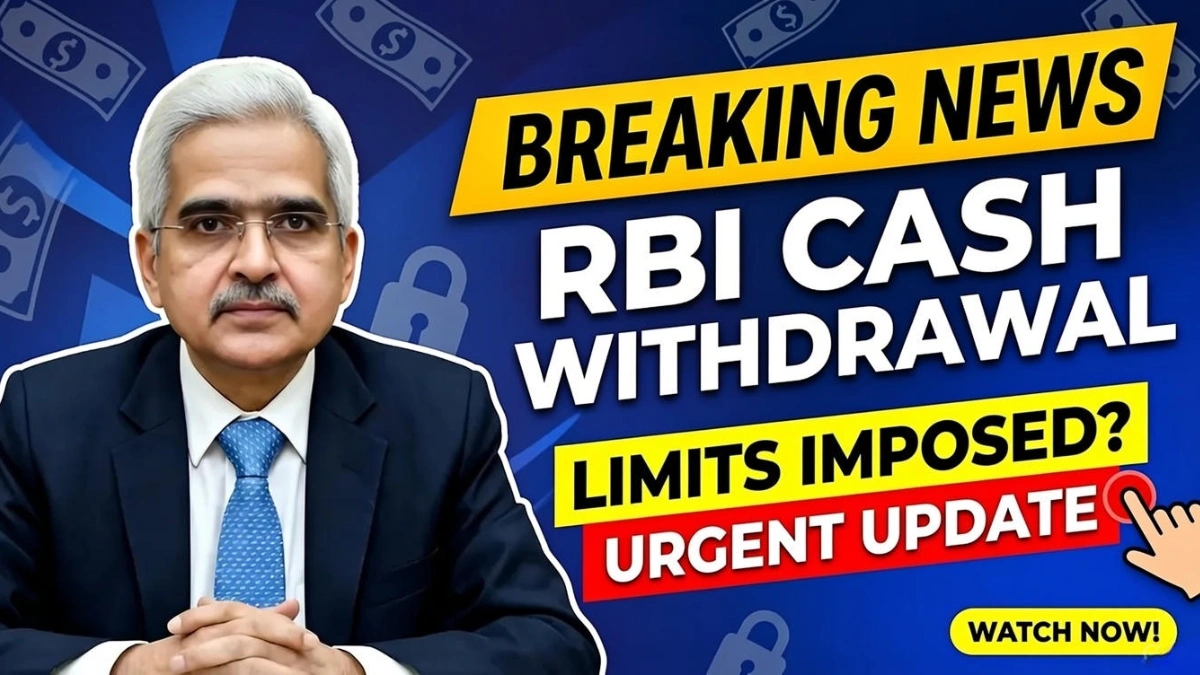
RBI Cash Withdrawal Shock 2025: A sudden banking update has triggered confusion and concern among account holders across the country. Under a recent regulatory action, cash withdrawals have been restricted to ₹35,000, leaving many customers worried about access to their own money. The move, guided by the Reserve Bank of India, has sparked widespread questions about who is affected, why the limit was imposed, and how long it will last.
Why RBI Has Imposed the ₹35,000 Withdrawal Limit
The RBI does not impose withdrawal limits without serious reasons. Such restrictions are typically introduced when a specific bank faces financial stress, governance issues, or liquidity concerns. The objective is to prevent panic withdrawals and protect the interests of all depositors equally.
This step allows regulators time to assess the bank’s condition and work toward corrective measures such as capital infusion, restructuring, merger, or resolution.
Does the ₹35,000 Cash Limit Apply to All Banks
This is the most important clarification customers need. The ₹35,000 withdrawal cap does not apply to all bank accounts in India. It is enforced only on customers of banks placed under RBI directions or special regulatory supervision.

Accounts held in stable public sector banks, private banks, and most cooperative banks continue to function normally without any new withdrawal ceiling.
What Transactions Are Affected by the Restriction
The restriction mainly applies to cash withdrawals from bank branches and ATMs. Non-cash transactions are generally allowed to continue.
Digital payments such as UPI, debit card usage, net banking transfers, bill payments, and merchant transactions usually remain operational, helping customers manage daily expenses even when cash access is capped.
How Long Will the Withdrawal Restriction Stay in Place
Withdrawal limits are typically temporary. They remain active until the RBI finalizes a resolution plan for the affected bank. The duration can range from a few weeks to several months depending on how quickly corrective steps are implemented.

Customers are advised to monitor official announcements rather than rely on speculation.
Are Customer Deposits Safe Under RBI Restrictions
Deposit safety is a top concern, and RBI actions are designed to protect depositors, not harm them. Deposits continue to be covered under existing deposit insurance rules up to the prescribed limit.
Historically, RBI interventions have ensured orderly resolution without depositors losing insured amounts.
What Customers Should Do If Their Bank Is Affected
Customers should remain calm and avoid rushing to branches based on rumors. Acting in panic can worsen the situation and cause unnecessary inconvenience.

• Follow only official bank notices and RBI updates and plan cash usage carefully while relying more on digital payments.
Maintaining transaction records and updated KYC details is also advisable during this period.
Key Details of the ₹35,000 Cash Withdrawal Restriction
| Aspect | Current Status |
|---|---|
| Withdrawal Limit | ₹35,000 |
| Applicability | Select banks under RBI directions |
| Cash Withdrawals | Restricted |
| Digital Payments | Mostly unaffected |
| Nature of Rule | Temporary safeguard |
This overview helps customers quickly understand what the restriction actually means.
Why RBI Uses Withdrawal Caps as a Regulatory Tool
Withdrawal limits are used to prevent sudden fund outflows that could destabilize a struggling bank. By controlling cash movement, RBI gains time to stabilize the institution and protect the broader financial system.

This approach has been used in past banking crises to avoid systemic risk.
What This Means for Everyday Bank Customers
For customers of unaffected banks, there is no immediate change. For affected customers, the focus should be on budgeting cash withdrawals, using digital alternatives, and staying informed.
The situation also highlights the importance of diversifying banking relationships and staying aware of a bank’s financial health.
Conclusion: The ₹35,000 cash withdrawal restriction imposed under RBI supervision is a precautionary and temporary measure aimed at protecting depositors and maintaining financial stability. It does not apply to all banks and does not mean customers will lose their money. Staying calm, informed, and reliant on official updates is the best approach until normal banking operations are restored.

Disclaimer: Withdrawal limits, duration, and applicability depend on RBI directions and bank-specific conditions and may change with official notifications.