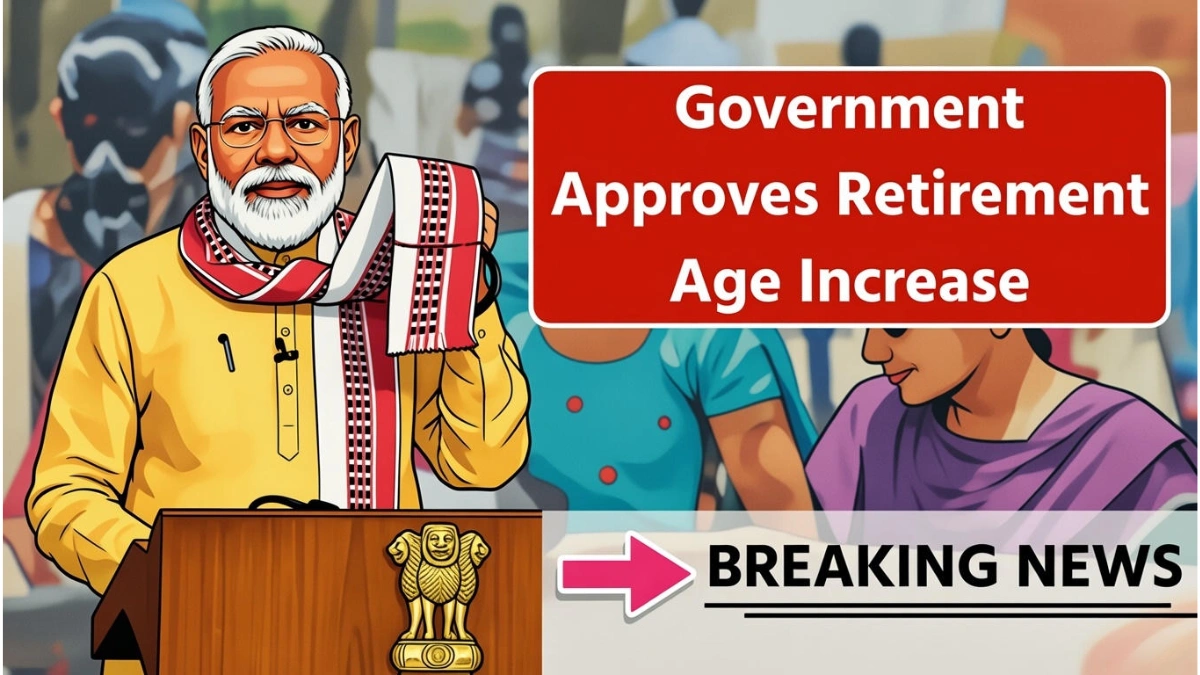
The government has approved a major policy shift that directly impacts lakhs of central government employees. From 2026, the retirement age for central employees will increase by two years, moving from 60 to 62. The decision is being seen as a landmark reform aimed at retaining experienced talent, easing workforce gaps, and providing extended income security to employees nearing superannuation.
Why the Retirement Age Increase Is Big News
For years, employee unions and administrative bodies have debated the need to revise retirement norms in line with longer life expectancy and changing workforce demands. The approval of a higher retirement age addresses these concerns while offering employees additional service years, salary continuity, and higher pension-linked benefits.
The move has gained attention because it applies across multiple central government departments and ministries, impacting both serving employees and future retirees.
What Exactly Has Been Approved for 2026
Under the new rule, the retirement age for central government employees will be raised to 62 years, effective from 2026. This means employees who would have retired at 60 will now continue in service for two additional years.

The decision has been cleared at the policy level by the Government of India, with implementation guidelines expected to be issued department-wise.
Who Will Benefit from the Retirement Age Hike
The biggest beneficiaries are employees currently in their late 50s, who will now enjoy extended job security and income. Departments facing staff shortages, especially in technical, administrative, and advisory roles, are also expected to benefit from retained expertise.
Employees close to retirement gain additional time to strengthen savings, repay loans, and improve their overall financial planning.
Impact on Salary, Pension, and Service Benefits
An extended service period directly increases total earnings and enhances retirement benefits. Higher last-drawn basic pay improves pension calculations and boosts gratuity and other terminal benefits.

Employees will also continue to receive allowances and annual increments during the extended service period, improving overall take-home income.
• Two extra years of salary, higher pension base, improved gratuity, and extended job security are the key advantages of the new retirement rule.
Will the Rule Apply to All Central Employees
While the policy applies broadly to central government employees, final applicability may vary slightly by cadre, service rules, and departmental requirements. Uniformed services and certain specialized roles may follow separate regulations.
Detailed clarifications are expected through official notifications before the 2026 rollout.

Why the Government Took This Decision Now
The decision aligns with demographic changes, increasing life expectancy, and the need for continuity in governance and administration. Retaining experienced officers helps reduce recruitment pressure and training costs while ensuring institutional knowledge is preserved.
The policy also supports economic stability by keeping skilled professionals active in the workforce for longer.
What Employees Should Do Next
Central government employees are advised to stay updated on official circulars issued by their respective departments. Understanding how the extended service period affects promotions, transfers, and retirement planning will be important.
Financial planning should also be reviewed to account for the additional working years and revised retirement timelines.

Conclusion: The increase in retirement age to 62 from 2026 marks a significant shift in central government employment policy. By extending service tenure, the government has provided financial relief, career continuity, and enhanced retirement benefits to lakhs of employees. As implementation details emerge, this reform is expected to bring long-term stability to both the workforce and the administrative system.
Disclaimer: Final implementation, eligibility, and service conditions will be subject to official notifications issued by the government and may vary by department.