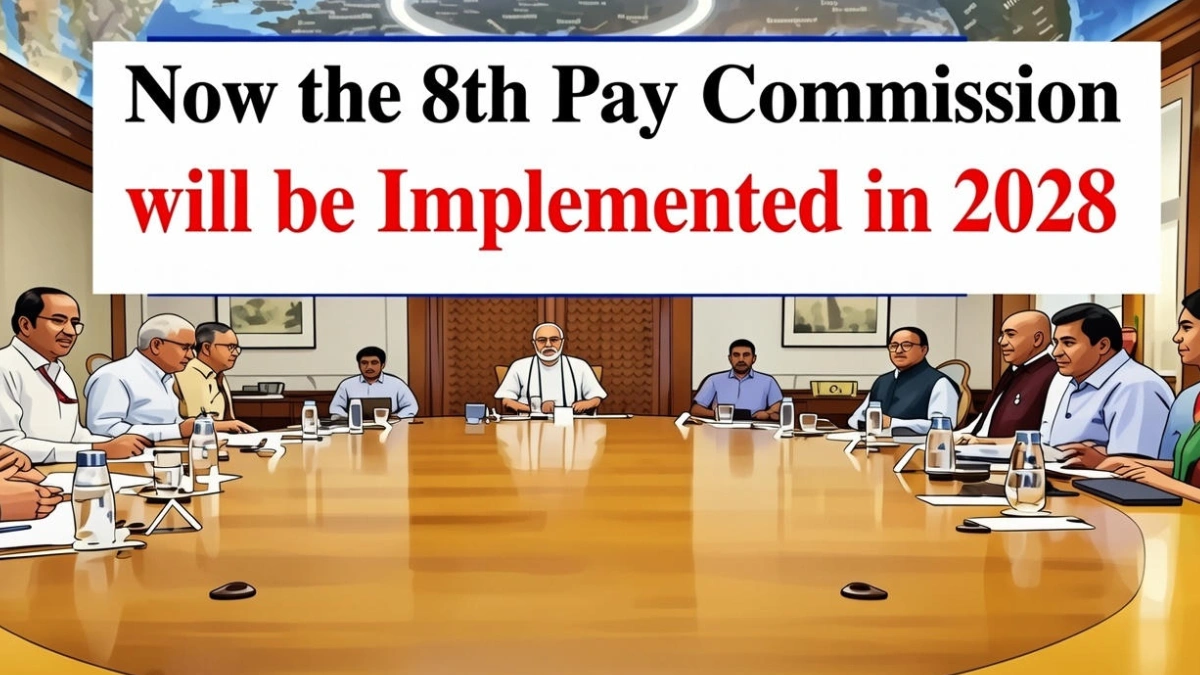
The government has taken a significant decision regarding the 8th Pay Commission, confirming that its implementation will now take place in 2028 instead of earlier expectations. This announcement has drawn strong reactions from government employees and pensioners. The decision impacts salary revisions, allowances, and long-term financial planning for millions. It marks a crucial shift in the pay commission roadmap.
Why the 8th Pay Commission Is Being Implemented in 2028
The delay is linked to economic planning, fiscal balance, and administrative preparation. The government aims to ensure financial sustainability before rolling out a major salary revision. Existing pay structures under the 7th Pay Commission will continue until then. Officials believe that a later implementation allows better assessment of revenue growth and expenditure commitments.

Impact on Government Employees
For serving employees, this means no immediate salary revision under the 8th Pay Commission. However, annual increments and dearness allowance revisions will continue as per existing rules. While some employees are disappointed, others see the move as a step toward a more stable and comprehensive pay revision later. Financial planning timelines may need adjustment.
What It Means for Pensioners
Pensioners will also need to wait longer for any pension recalculation linked to the 8th CPC. Since pensions are tied to pay commission recommendations, the delay extends the current pension structure. This has raised concerns among senior citizens coping with rising living and medical costs. Pensioner associations are expected to seek interim relief measures.

8th Pay Commission Timeline Overview
| Aspect | Details |
|---|---|
| Pay Commission | 8th Pay Commission |
| Earlier Expectation | Before 2028 |
| Revised Implementation | 2028 |
| Affected Groups | Employees and pensioners |
| Current Pay Structure | 7th Pay Commission |
This table highlights the revised timeline and its implications for stakeholders.
Will There Be Any Interim Relief Before 2028
Although the 8th CPC is delayed, the government may continue to rely on Dearness Allowance hikes to offset inflation. There is also speculation about possible interim adjustments, though nothing has been officially confirmed. DA revisions remain the primary relief mechanism until the new pay commission takes effect.

Employee and Union Reactions
Employee unions have expressed mixed reactions to the announcement. While some have accepted the fiscal reasoning, others are urging the government to reconsider or offer interim benefits. Discussions and representations are expected to continue in the coming months.
What Employees Should Do Now
Employees are advised to focus on long-term financial planning, keeping the 2028 timeline in mind. Monitoring DA trends and official announcements will be important. Any future updates regarding interim relief or commission formation should be followed closely.

Conclusion: A Strategic but Delaying Decision
The decision to implement the 8th Pay Commission in 2028 is a strategic move by the government aimed at economic stability. While it delays salary and pension revision, it also sets the stage for a more structured and sustainable pay reform. Employees and pensioners will now look toward interim measures and future clarity.
Disclaimer: This article is for informational purposes only. Details regarding the 8th Pay Commission timeline, implementation, and related benefits are subject to official government notifications and may change.