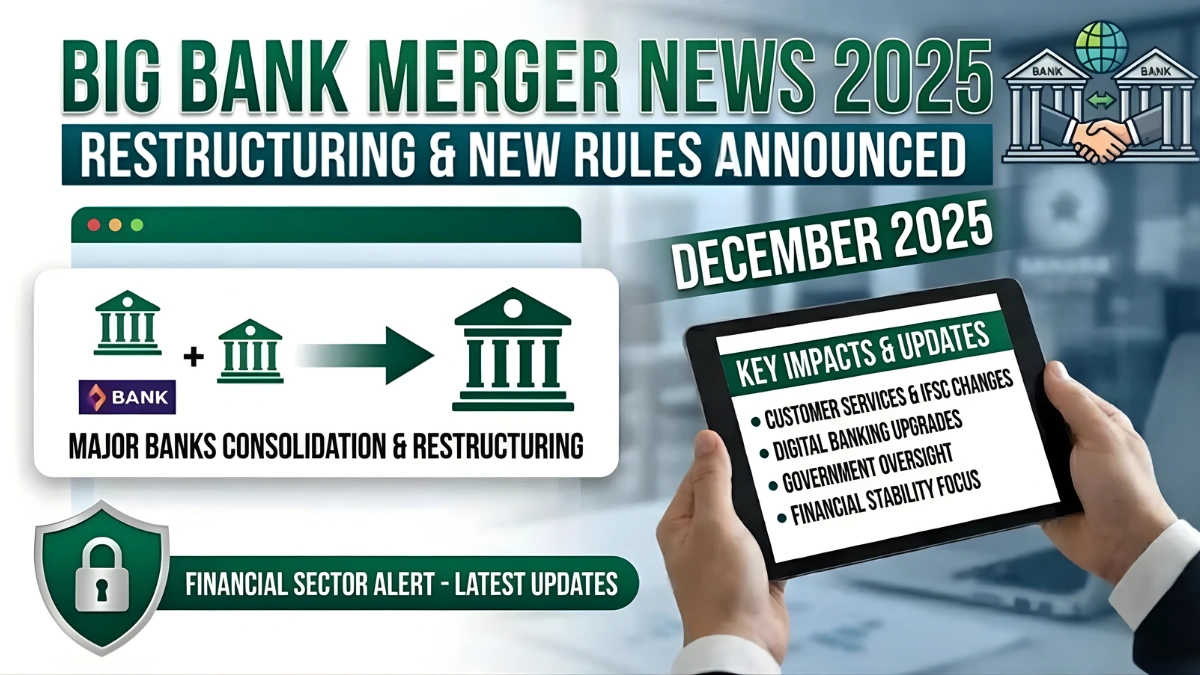
The Indian Bank Merger Shake-Up 2025 is creating intense discussion across the banking sector as the government moves forward with major restructuring plans aimed at building stronger, more efficient banks. With consolidation talks, operational changes, and updated customer rules, millions of account holders are asking one key question: how will bank mergers affect everyday customers in 2025?
Why Indian Bank Mergers Are Back in Focus
India’s banking sector has undergone multiple consolidation phases over the past few years. The core objective has been to reduce fragmentation, strengthen balance sheets, and improve lending capacity. In 2025, the government is revisiting this strategy to further enhance financial stability and global competitiveness of Indian banks.
The restructuring push is aligned with long-term financial sector reforms supported by institutions such as Reserve Bank of India, which oversees systemic stability and customer protection.
What the 2025 Bank Merger Shake-Up Means
The 2025 plan focuses on merging select public sector banks into larger entities rather than creating new banks. The goal is to build fewer but stronger banks with improved capital adequacy, better technology adoption, and wider reach.
This phase is expected to emphasize operational efficiency rather than emergency consolidation.

Which Banks Could Be Affected
While no final list has been officially confirmed, discussions indicate that mid-sized public sector banks with overlapping operations may be considered. Large banks formed after earlier mergers are expected to remain unchanged.
Private banks are not part of the merger exercise, though they may face indirect competitive impact.
What Happens to Existing Bank Accounts
For customers, the biggest relief is that existing savings, current, and fixed deposit accounts remain safe. Account numbers, balances, and deposits are protected even after mergers.
In most past mergers, customers were allowed to continue using existing accounts for a long transition period before any optional changes.
Changes in IFSC Code and Cheque Books
After a merger, IFSC codes may change due to branch realignment. However, customers are typically given ample time before the old IFSC becomes inactive.

Banks usually issue new cheque books and debit cards free of cost if required, ensuring uninterrupted transactions.
Impact on Loans and EMIs
Loans, EMIs, and interest rates generally remain unchanged after a merger. The terms agreed at the time of loan sanction continue to apply.
Over time, customers may benefit from improved service, digital platforms, or revised interest options under the merged bank’s policies.
New Rules Customers Should Be Aware Of
The 2025 restructuring phase is expected to introduce clearer communication norms. Banks will be required to inform customers well in advance about any changes affecting accounts, branches, or services.
Digital banking access and grievance redressal mechanisms are also expected to improve under the new structure.

What About Branches and ATMs
Some branch rationalization may happen in areas with heavy overlap. However, the government has indicated that rural and semi-urban banking access will not be reduced.
ATM access and digital banking services are expected to expand rather than shrink.
Benefits of Bank Mergers for Customers
Stronger banks can offer better technology, wider product choices, and improved customer service. Consolidation also helps banks manage risks more effectively, protecting depositors in the long run.
For customers, this often translates into better mobile banking apps, faster service, and stronger financial backing.
Indian Bank Merger 2025 Snapshot
| Area | What Customers Can Expect |
|---|---|
| Deposits | Fully safe and protected |
| Accounts | Continue without disruption |
| IFSC Code | Change possible, transition time given |
| Loans | No change in EMI terms |
| Branches | Limited rationalization |
| Digital Banking | Expected improvement |
This snapshot clears common customer concerns.

What Customers Should Do Right Now
Customers do not need to take immediate action based on speculation. It is best to wait for official announcements from banks or the government.
Keeping contact details updated with the bank ensures timely alerts if any changes are announced.
Role of Government and Banking Oversight
The merger process is being guided by the Government of India in coordination with financial regulators to ensure depositor safety, transparency, and smooth transition.
This oversight reduces the risk of disruption for ordinary customers.
Conclusion: The Indian Bank Merger Shake-Up 2025 marks another step in strengthening India’s banking system. While restructuring plans and new rules may sound disruptive, customers can be reassured that their money, accounts, and loans remain secure. With better communication, improved digital services, and stronger banks, the 2025 merger phase is designed to benefit both the financial system and everyday bank users in the long run.

Disclaimer: Bank merger plans, timelines, and affected institutions will depend on official government and RBI notifications. Customers should rely only on confirmed announcements from their banks.