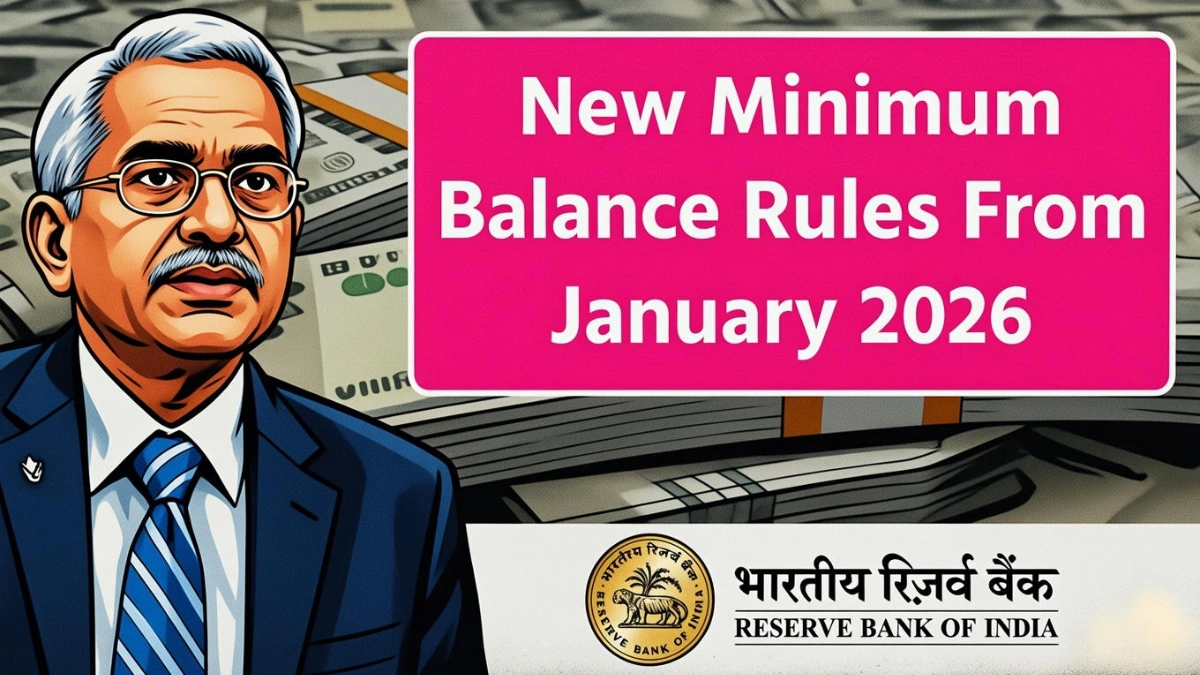
A major update from the banking regulator is set to impact crores of account holders across India. From January 2026, new minimum balance rules and penalty guidelines will come into effect following fresh directions issued by the Reserve Bank of India. These changes are designed to make banking more customer-friendly while reducing unfair charges on savings account holders, especially those with low or irregular balances.
Why the New Minimum Balance Rules Are Making Headlines
For years, customers have complained about unpredictable penalties and unclear minimum balance requirements across banks. The RBI’s latest intervention aims to bring transparency, fairness, and uniformity to how banks apply minimum balance rules and fees.
With rising digital banking usage and financial inclusion goals, these new guidelines are expected to benefit millions of salaried individuals, senior citizens, students, and rural account holders.
What Exactly Has Changed From January 2026
Under the new framework, banks must clearly define minimum balance requirements and related charges upfront. Arbitrary or excessive penalties will no longer be allowed.

Banks are also required to ensure that penalties are proportionate and do not exceed the shortfall amount. This prevents situations where customers lose a large sum for maintaining a slightly lower balance.
RBI’s Stand on Penalty Charges
The Reserve Bank of India has made it clear that penalty charges should be reasonable and transparent. Customers must be informed in advance through SMS, email, or app notifications before any penalty is applied.
This gives account holders a fair chance to restore their balance and avoid unnecessary deductions.
Who Will Benefit the Most From These New Rules
The biggest relief is expected for low-income groups and first-time banking users. Jan Dhan account holders, pensioners, students, and small traders will see fewer deductions due to accidental balance drops.

Urban customers with fluctuating balances will also benefit from clearer rules and advance alerts.
• No surprise deductions, lower penalty amounts, mandatory alerts, and better transparency for all savings account holders.
This single shift is expected to restore trust between banks and customers.
Are All Banks Covered Under This Rule
Yes, the new minimum balance guidelines apply to public sector banks, private banks, and small finance banks operating under RBI regulations. However, minimum balance thresholds may still differ based on bank policy and account type.

The key change is how penalties are calculated and communicated, not the complete removal of minimum balance norms.
What Account Holders Should Do Before January 2026
Customers are advised to check their bank’s current minimum balance requirement and compare it with the updated guidelines once banks publish revised policies. Updating contact details is also important to ensure penalty alerts are received on time.
Being aware and proactive can help avoid any last-minute confusion.
How This Impacts Digital and Zero-Balance Accounts
Zero-balance and basic savings accounts will continue to remain penalty-free. The RBI has reiterated that such accounts should not be burdened with minimum balance charges under any circumstances.

This strengthens financial inclusion and encourages more people to stay connected with the formal banking system.
Why RBI Introduced These Changes Now
The move aligns with RBI’s broader goal of consumer protection and simplified banking. With increased digital payments and direct benefit transfers, unnecessary penalties were seen as counterproductive.
The new rules aim to balance bank revenue needs with customer rights.
Conclusion: The new minimum balance rules effective from January 2026 mark a significant win for bank customers across India. By limiting penalties, enforcing transparency, and mandating advance alerts, the RBI has ensured that savings account holders are treated more fairly. While minimum balance requirements will not disappear entirely, the fear of sudden deductions is set to reduce drastically, benefiting lakhs of people nationwide.

Disclaimer: Exact minimum balance limits and charges may vary by bank and account type as per updated policies issued closer to implementation.