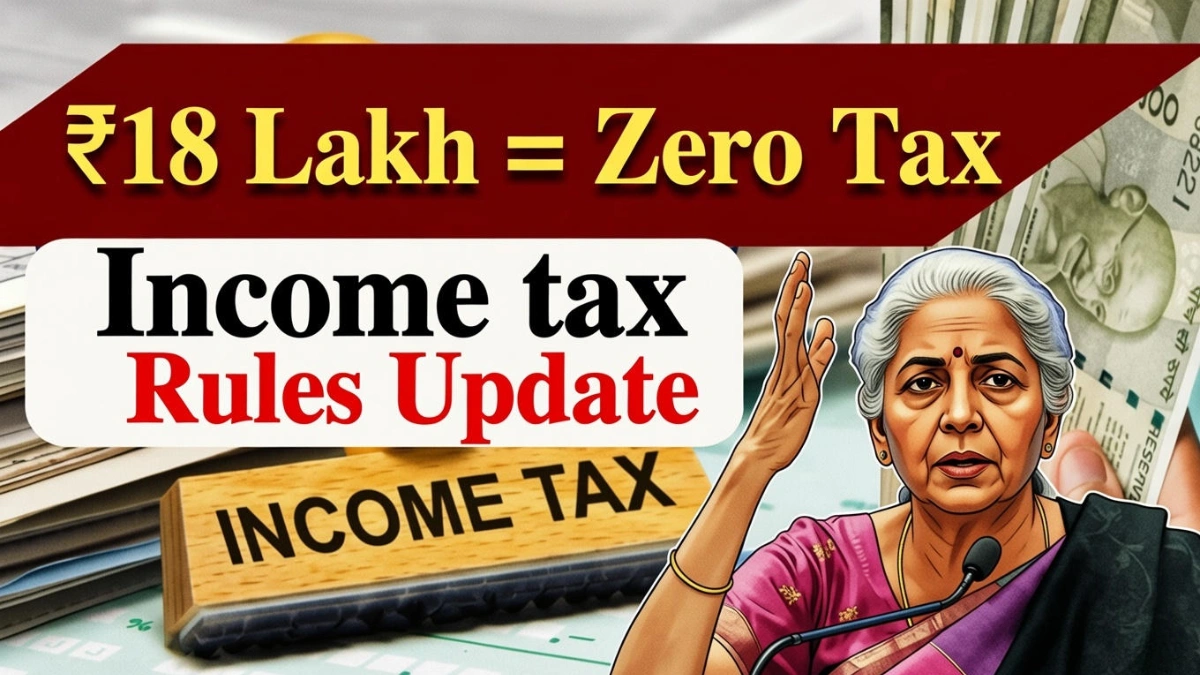
The government has announced a significant update in income tax rules, allowing individuals earning up to ₹18 lakh annually to be exempt from paying income tax. This change is expected to provide financial relief to middle and upper-middle-class taxpayers while simplifying the tax structure. It is seen as a step toward easing the burden of taxation in India.
Who Will Benefit From the Tax Rule Update
This exemption primarily benefits salaried employees, professionals, and small business owners whose annual income does not exceed ₹18 lakh. Families relying on a single income will see substantial savings, while young professionals and mid-career employees can retain a larger portion of their earnings.

Why the Government Made This Change
Rising inflation and the growing cost of living have pressured households and salaried individuals. By raising the tax-free threshold, the government aims to increase disposable income, stimulate consumer spending, and provide economic relief. This decision is also expected to simplify the tax filing process for many taxpayers.
Impact on Taxpayers
With this exemption, millions of individuals can save a significant portion of their annual income. People earning near ₹18 lakh will experience zero tax liability under this new rule. The increased take-home pay can be used for investments, savings, or daily expenses, contributing to overall financial stability.

Income Tax Update Overview
| Feature | Details |
|---|---|
| Tax-Free Income Limit | ₹18 Lakh per year |
| Beneficiaries | Salaried individuals, professionals, small business owners |
| Objective | Reduce tax burden, increase disposable income |
| Implementation | As per government notification |
| Expected Benefit | Higher take-home pay, economic boost |
This table summarizes the key highlights of the new income tax rule.
Effect on Income Tax Filing
Taxpayers earning below ₹18 lakh will still need to file returns, but their tax liability will be zero. The process remains the same, but calculations for tax payments will automatically reflect the exemption. Digital filing systems and payroll software are expected to be updated accordingly.

Financial Planning Tips for Taxpayers
Even with the exemption, it is advisable for individuals to plan investments, savings, and retirement contributions carefully. Tax-free income can be strategically used for mutual funds, fixed deposits, or other financial instruments to ensure wealth growth and financial security.
Conclusion: A Welcome Relief for Millions
The new income tax rule increasing the tax-free limit to ₹18 lakh is a major relief for taxpayers across India. It ensures more disposable income, encourages savings, and reduces financial stress for salaried and self-employed individuals. Staying updated with official notifications will help taxpayers maximize the benefit of this policy.

Disclaimer: This article is for informational purposes only. Income tax rules, exemption limits, and implementation are subject to official government notifications and may change.