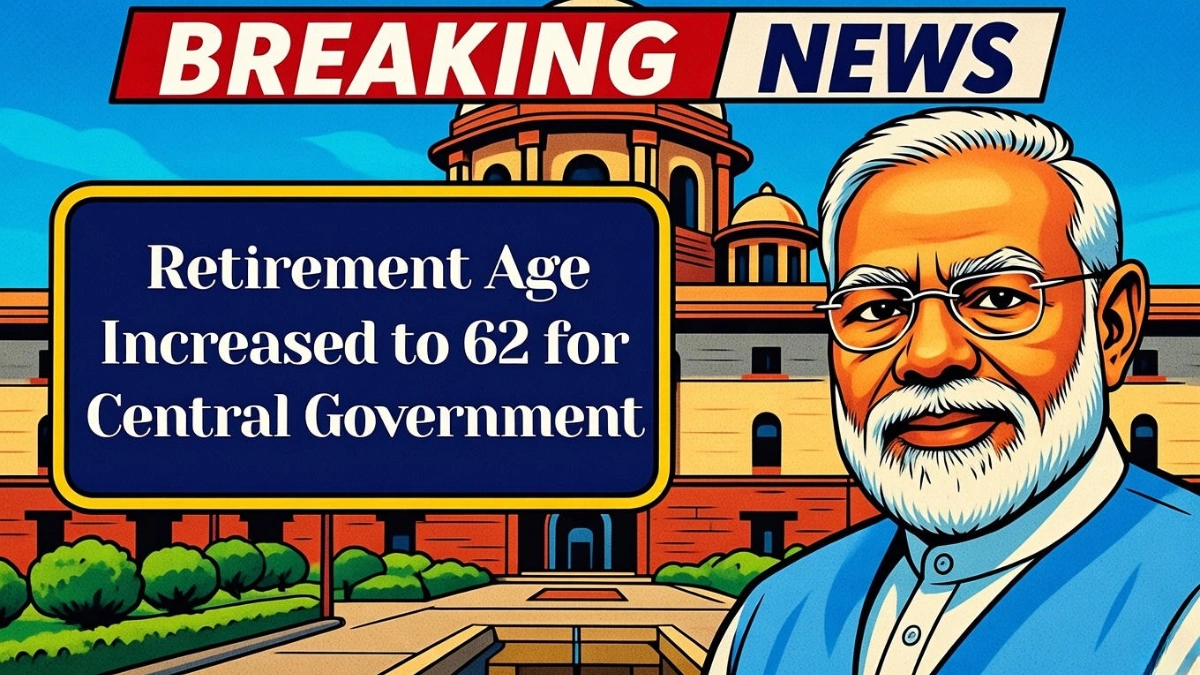
A major wave of discussion has swept across social media and employee circles after claims emerged that the retirement age for Central Government employees has been increased to 62 years. The news has sparked excitement, confusion, and urgent questions among lakhs of government staff approaching retirement.
Here is a clear, factual breakdown of what has actually changed, what has not, and what employees must know right now.
Where the Retirement Age Hike News Is Coming From
The discussion around increasing the retirement age to 62 is largely driven by policy debates, expert recommendations, and internal workforce discussions rather than an official blanket notification. With rising life expectancy, improved health standards, and staff shortages in key departments, the idea of extending service tenure has gained traction.
However, it is important to separate policy conversations from confirmed implementation.

Current Official Retirement Age for Central Government Employees
As of now, the official retirement age for Central Government employees remains 60 years. There has been no universal government order raising the retirement age to 62 across all central services.
This position continues under the authority of the Government of India, and any change would require a formal Cabinet decision and notification.
Then Why Is “62 Years” Being Discussed So Widely
The age of 62 is being discussed mainly in the context of selective extensions, contractual re-employment, and special categories. In some departments and roles, experienced officers are being retained beyond 60 due to skill requirements or project continuity.
These are case-specific decisions, not a general retirement age hike.

Categories Where Age Extensions Are Already Seen
Certain professionals already work beyond 60 under existing rules. These include doctors, scientists, professors, and domain experts, especially in education, health, and research sectors.
Such extensions are granted based on institutional need and approval, not automatic eligibility.
What Would Change If Retirement Age Becomes 62
If a future policy officially raises the retirement age to 62, it would significantly impact promotions, pension timelines, and workforce planning. Employees would gain two extra years of salary and service benefits, while younger aspirants might face delayed recruitment cycles.
That is why any decision in this direction is handled cautiously.

Key Points Employees Should Understand Right Now
• No official order has raised retirement age to 62
• Retirement age for Central Government employees is still 60
• Extensions beyond 60 apply only to specific roles
• Any future hike will require formal notification
• Social media claims should be verified carefully
Central Government Retirement Rules Snapshot
| Aspect | Current Status |
|---|---|
| Standard Retirement Age | 60 years |
| Retirement at 62 | Not approved |
| Extensions | Case-specific |
| Authority | Government of India |
| Official Notification | Not issued |
Why the Government Is Cautious About a Universal Hike
Raising retirement age has wide consequences, including pension burden, promotion stagnation, and recruitment delays. While experience retention is valuable, the government must also balance employment opportunities for younger generations.
As a result, discussions continue but implementation remains selective.
What Central Government Employees Should Do
Employees nearing retirement should continue planning based on the existing 60-year retirement rule. Any official change will be announced well in advance through formal channels.

Relying on unofficial messages or viral posts may lead to incorrect financial or career planning.
Why This Topic Keeps Returning to the Headlines
Every few years, the retirement age debate resurfaces due to demographic changes, economic pressures, and workforce needs. While some states and institutions have made adjustments, a pan-India central government hike remains a sensitive policy decision.
This keeps speculation alive, even without confirmation.
Conclusion: Despite widespread buzz, the retirement age for Central Government employees has not been officially increased to 62 years. The current retirement age continues to be 60, with only limited, role-based extensions in select sectors. Employees should rely only on official notifications and not act on unverified claims. Any real change, if approved in the future, will come with clear government communication and transition timelines.

Disclaimer: This article is based on current official information and publicly available policy positions. Retirement rules are subject to government notification and may change in the future. Employees should verify updates through official government sources.